When the cloud also "rains": Insights from a cloud provider's outage on building a multi-cloud high availability solution
A single outage reveals the fragility of"single cloud dependency" to the world; an intelligent switch brings true resilience to enterprises.
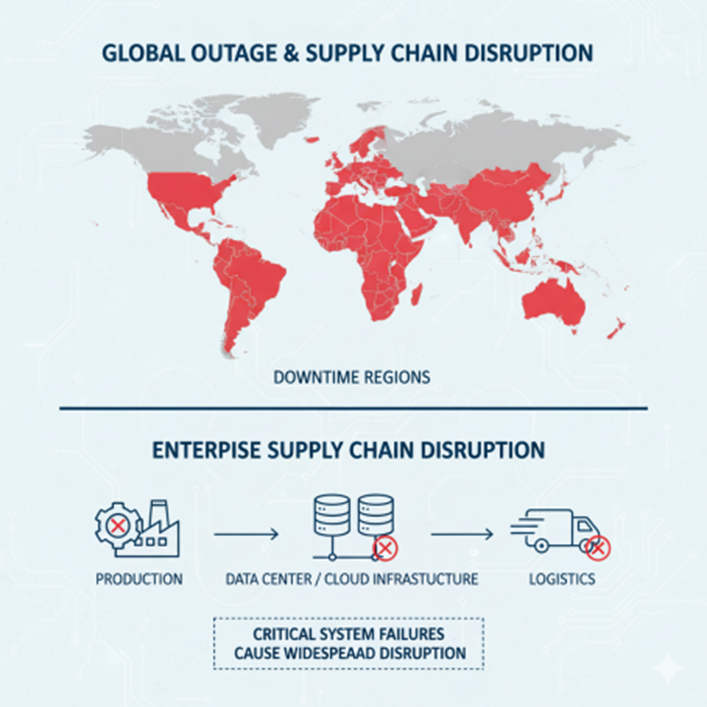
Recently, a cloud service provider experienced a service disruption in some regions. Within just a few hours, thousands of websites and systems went down, affecting e-commerce, payment, logistics, and public services. From e-commerce to logistics, from SaaS applications to media websites, issues such as shopping carts failing to submit, payment pages freezing, API gateways timing out, customer service tickets going unanswered, and even passengers being unable to leave the aircraft cabin until the cloud was restored were reported.
For many enterprises that rely on a single cloud platform,continuous cloud failures mean:
Key business operations are suspended, resulting in compromised customer experience;
Data recovery is complex, and the switching process islengthy;
The SLA commitment lapses, leading to a sharp increasein compliance risks.
Several outages ofthe cloud have once again made the world aware of a harshreality:
Any cloud can"rain".
"Going to the cloud"≠ "High availability".
True digital resilience stems from cross-cloud architecture and intelligent governance capabilities.
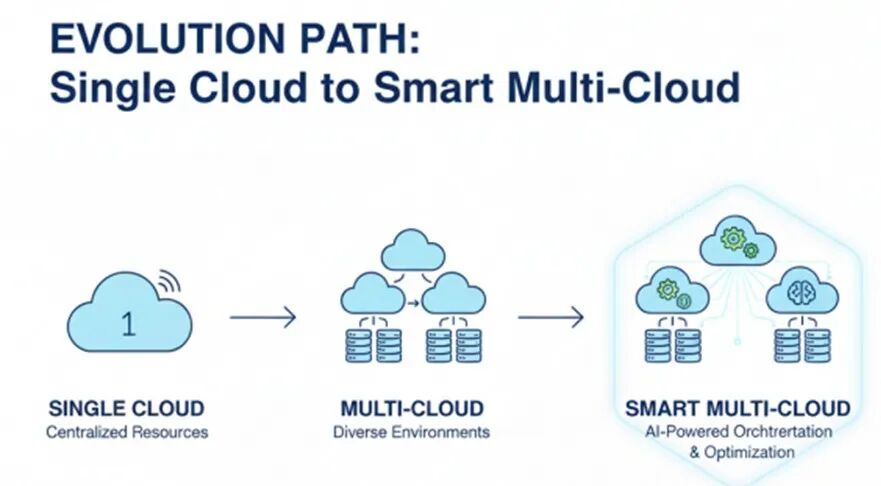
Single cloud is a starting point, but multi-cloud is inevitable. The complementary advantages of different cloud vendors in resources, geography, compliance, and cost constitute a safer and more flexible digital foundation.
Multi-cloud brings flexibility and freedom,but also fragmentation and complexity:
Different cloud API standards make cross-cloud deployment difficult;
The monitoring, billing, and approval systems are fragmented;
The disaster recovery switching process cannot be standardized.
In the era ofmulti-cloud, the biggest challenge in building a high-availability and disaster recovery system is not the lack oftechnology, but rather complexity and fragmentation. Each cloud has its own API, network model, monitoring interface, billing rules, and
storage characteristics. Enterprises often spend a lot of time switching between different platforms, configuring, andverifying, rather than focusing on business continuity itself.
The CloudChef platform is not just a simple multi-cloud portal, but acentralized hub forcross-cloudunified scheduling and automated orchestration, transforming the concept of"cross-cloud high availability" into an executable, drillable,and monitorablesystem.
I. Integrated multi-cloud unified operation management
SmartCMP achieves the following across multiple clouds such asAWS,Azure,Huawei Cloud, andAlibaba Cloud by unifying theAPI layer and IaC templates:
Unified service catalog and resource modeling;
Align cross-cloud costs with billing;
Centralized identity authentication and RBAC governance.
Let the complexity of
multi-cloud be encapsulated by a"unified language".
1. Traditional pain points
Each cloud vendor has different interfaces, templates, and authentication mechanisms. To achieve consistent deployment across clouds, enterprises must maintain multiplesets ofscripts, credentials, and API integrations.
The problem brought by this fragmentation is:
Managementisdecentralized, andthestatusofresourcesisnotvisible;
The standards for permissions, billing, and monitoring are not unified;
The cost for newcomers to take over is high, and systemexpansion posesdifficulties.
2. How does SmartCMP solve the problem
SmartCMP encapsulates the differences betweenAWS,Azure, Huawei Cloud,Alibaba Cloud, and other clouds through a unified infrastructure-as-code approach. Developersand operation personnel can achieve"one-time definition, multi-cloud delivery" by simply using the generic model provided by SmartCMP.
Built-in on the platform:
Unifiedservicecatalogandresourcetemplate(IaC);
Role-BasedAccess Control (RBAC) across clouds;
Automated tenant, approval, and billing systems;
FinOps cost analysis andallocation report.
3. Value and benefit
Multi-cloud resources are "visible, controllable, and governable";
Standardize processes such as deployment, approval, andbilling;
Provide a unified data interface for subsequent AI and automation optimization.CloudChef SmartCMP makes"cross-cloud management" from complex to controllable.
II. Unified monitoring and intelligent alert system
1. Traditional pain points: fragmented monitoring and information silos
In a multi-cloud architecture, enterprises often deploy multiple monitoring systems:
AWS uses CloudWatch;
Azure uses Monitor;
Alibaba Cloud uses CloudMonitor;
Huawei Cloud uses CES (Cloud Eye Service);
The internal data center may also include Zabbix, Prometheus, and Grafana.
On the surface, surveillance seems ubiquitous; in reality,it hasled to theformationof information silos. More seriously, unified response actions cannot be triggered across multiple clouds.
2. How does SmartCMP solve the problem
Multi-Cloud MetricsAggregation
SmartCMP automatically integrates with various cloud's native monitoring systems (CloudWatch, Monitor, CES, etc.) through unified metric collection and standardized models.
The system performs semantic alignment, metric mapping, and unified modeling on the collected metrics, presenting the health status and key metrics ofall cloud resources ina unified monitoring view.
CentralizedAlert Management
SmartCMP provides a cross-cloudalert center where all alerts from different cloudsand systems are aggregated, deduplicated, and categorized.
Enterprises can define unified threshold policies, alert levels, and response ruleson theSmartCMP platform.
Regardless ofwhich cloud vendor the anomaly originates from, it can be processed using a unified languageand logic.
3. Value and benefits
Unified cross-cloud monitoring
Eliminates fragmented monitoring and achieves unified aggregation of multi-source data from AWS,Azure, Alibaba Cloud, Huawei Cloud, private clouds, and more.
Centralized alert linkage
Unifies alert standards and strategies, providing the operationteam with a"Single Screen for the EntireCloud" perspective.
Full traceability and reporting:
Every alert and every switching actioncan beaudited, replayed,and verifiedtoensurecompliance and transparency.
SmartCMP makes"monitoring" no longerjust observation, but decision-making andaction.
III. Automated cross-cloud switching and drills
1. Traditional pain points
In traditional multi-cloud or hybrid cloud architectures, disaster recovery switching often relies on manual operations:
After a failure occurs, engineers need to manually shutdown the main system,start the backup instance, update DNS, and switch database connections.
Human errors or operational delays may occur ineachstep.
More importantly, manydisaster recovery plans"only exist in PPTs" due to thehighcostandcumbersomeprocessofactualdrills.
The result is that when a disaster really strikes, the switchover can take hours or even days.
2. How does SmartCMP solve the problem
SmartCMP, through its built-in Pipeline automation engine,"orchestrates, scripts, and templates" the entire disaster recovery process:
Configure active-standby verification, data replication, DNS switching, traffic steering, and service recovery through a graphical interface;
One-click execution or regular automatic drills to ensure quick switching at any time;
Supports various architectural models such as active-standby switching, partitiondisaster tolerance, and multi-active in different locations.
3. Value and benefit
Reduce the RTO (Recovery Time Objective) from hours to minutesor evenseconds;
Significantly reduce manual operations to avoid human errors;
Through visual logs and drill reports, an auditable and reusabledisaster recoverysystem isformed.

In the unpredictable era of cloud computing, reliability is no longer a promise made by vendors, but a comprehensive reflection of an enterprise's own architecture,automation, and governance capabilities.
CloudChef SmartCMP helps enterprises:
Build a cross-cloud high availability and automated disaster recovery system;
Integrate multi-cloud monitoring metrics with a unified alert system;
Realize integrated intelligent operation of "monitoring–orchestration–execution";
Shift IT from "passive repair" to"active defense".
CloudChef SmartCMP – Making multi-cloud simpler and high availability more intelligent.