Unified Cloud ITSM for Multi-Cloud
Build a unified IT service entrance and experience. Associate and track manual services, automated operation and safety control required.
ITSM for Multi-Cloud
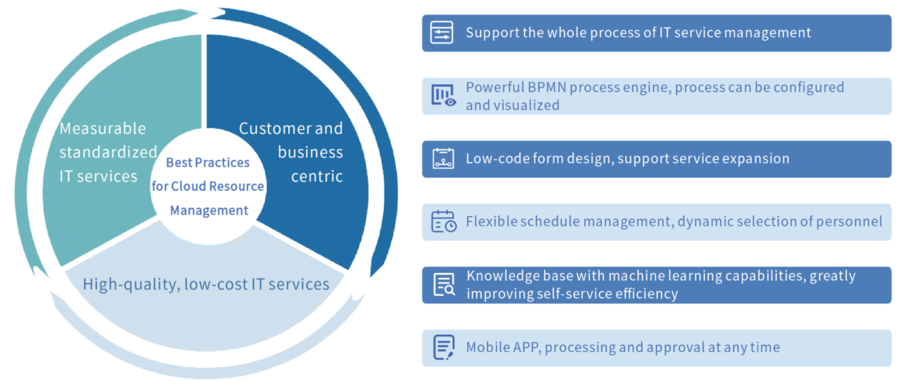
ITSM platform is a set of IT service management system for multi-cloud environment, dedicated to transform ITSM best practice principles into agile IT service process in modern multi-cloud environment. Through low-code and convenient operation, it can design, create, deliver, support and manage all activities of the IT service life cycle.
Highlight
- For Multi-cloud: Seamless integration of multi-cloud platforms: Alibaba Cloud, Huawei Cloud, AWS, VMware...
- Intelligent: Auto ticket assignment / Intelligent schedule / SLA monitoring
- Flexible: Flexible and convenient workflow design / Low-code interaction
- Easy to operate: Submit tickets in 5 seconds, Assign tickets in 0 / Simple and easy to use / Mobile APP
Unified Service Entrance to Achieve IT as a Service

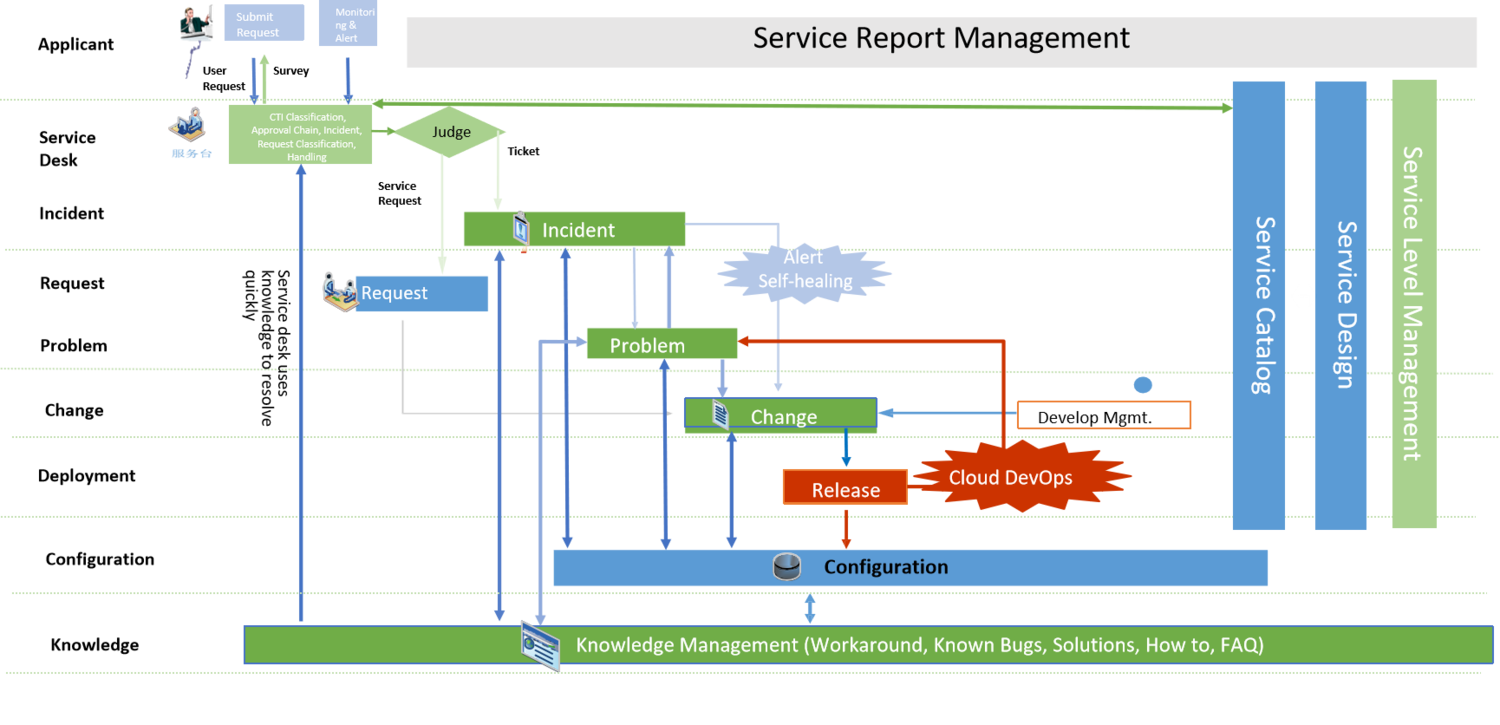
Covers standard ITIL service processes
Define strategies for provisioning infrastructure and application resources
Unified service catalog for manual service and automated service request
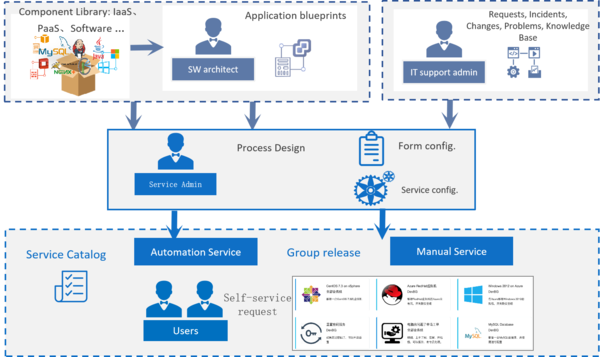
The platform's open interface is for users to configure application parameters and operations. Orchestration and configuration services have become a standardized resource and application delivery method, and users can edit and re-define predefined service configurations at any time.
- Integrate internal processes (for example: approval process / cloud service deployment process), and customize the fields that can be modified during approval / request.
- Configure cloud resource blueprint services, providing a standardized and universal interface. Users can quickly configure resource usage strategies, permissions, and parameters according to their needs.
- Flexible definition of additional attribute parameters of cloud services through forms to achieve efficient delivery of personalized infrastructure, applications and IT services.
Flexible customization process to meet different scenarios
Service processes and forms, based on a low-code, visual designer, can be quickly built and adjusted
Easily customize processes through a web-based designer to provide a rich, flexible, and service defining approach which follows the control requirements to your IT
- Service process design, specifying cloud resource automation deployment tasks and manual tasks, and the ways to transfer between tasks.
- Different types of approval process design, flexibly defining multi-level approval, parallel approval, conditional approval, etc.
- Different processes can be set up on department level or individual service level to meet different scenario requirements.

Visual service desk and to-do tasks for easy tracking and processing
- You can track the processing progress through the service desk, quickly apply for services, export historical reports, view the latest processing status, etc.
- Adapt to various roles of ITIL. The built-in roles of the system include ITIL agent, change manager, problem manager, request manager, and incident manager

Knowledge base Mgmt, which can be intelligently matched with tickets
The knowledge base can retain and share information, avoid information silos and knowledge loss, provide faster solutions for end users, and make technicians more efficient
- Support article retrieval, collection, like, comment functions
- Support article editing, publishing, unpublishing, and archiving functions
- Support problem incident one-click conversion to knowledge base
- Supports intelligent matching of knowledge base content in tickets

Schedule Management
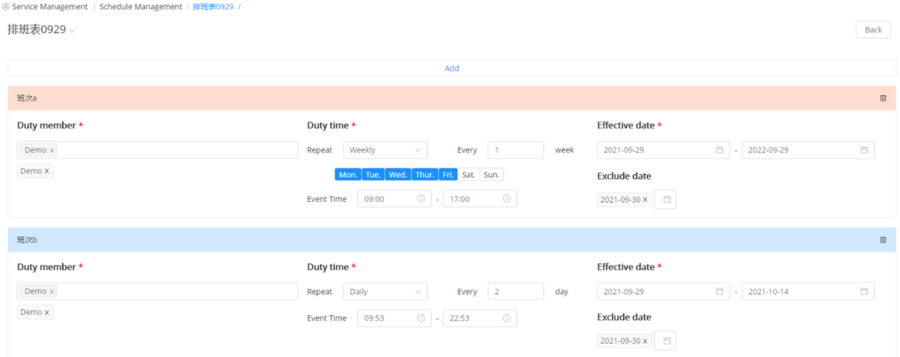
- The platform automatically assigns the pending manual tasks to the staff on duty, and upgrades them according to the SLA
- Schedule managers can select roles, positions, tasks, service teams and other scheduling modes through the system
Service Level Agreement
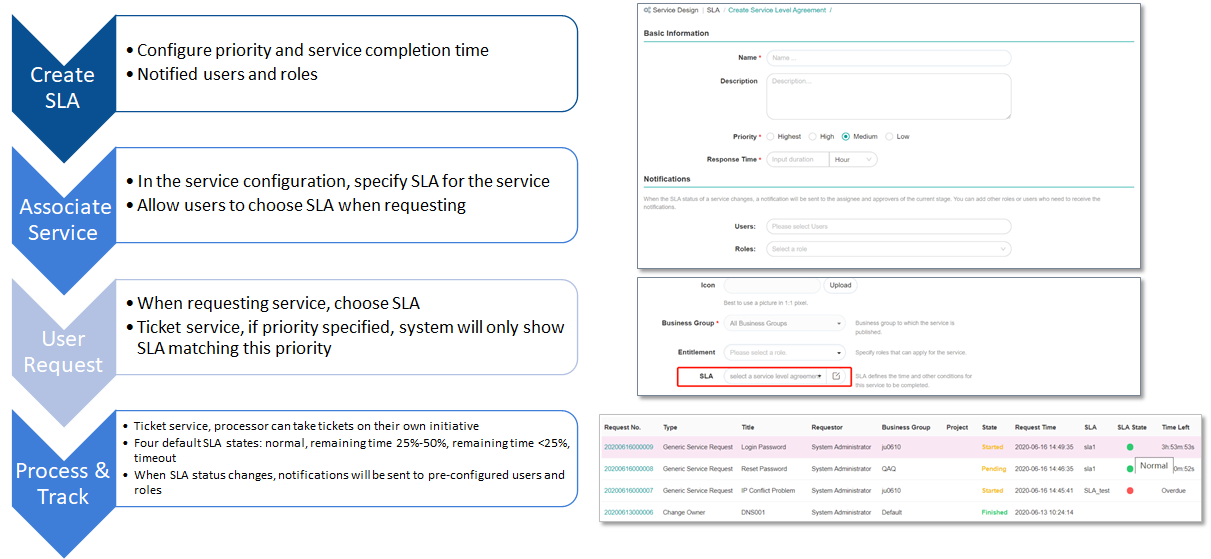
SLA is a kind of commitment and agreement between service providers and applicants. It defines the time and other conditions for the completion of the service. The service level agreement can be associated with the service provided by the platform to ensure timely tracking of service processing.
More products
One platform, six products